After experimenting with QRSS on 136 kHz about 20 years ago, I started playing with QRSS on HF in 2024. There is an active community called the QRSS Knights on groups.io.
I am running a DFCW transmitter with just 100mW output from an original G0UPL "Ultimate" QRSS transmitter and a simple sloper wire in KO01NU, about 15km away from the SO5CW main QTH. It is around 10139.860 kHz and can typically only be seen reliably on SA6BSS's Grabber. Unfortunately it can not be detected at all on my own grabber.
Since I have no permanent antennas at home, I installed a grabber at SO5CW in July 2024.
Details of the grabber setup can be found on a separate page: QCX + Raspberry Pi QRSS grabber and WSPR receiver setup.
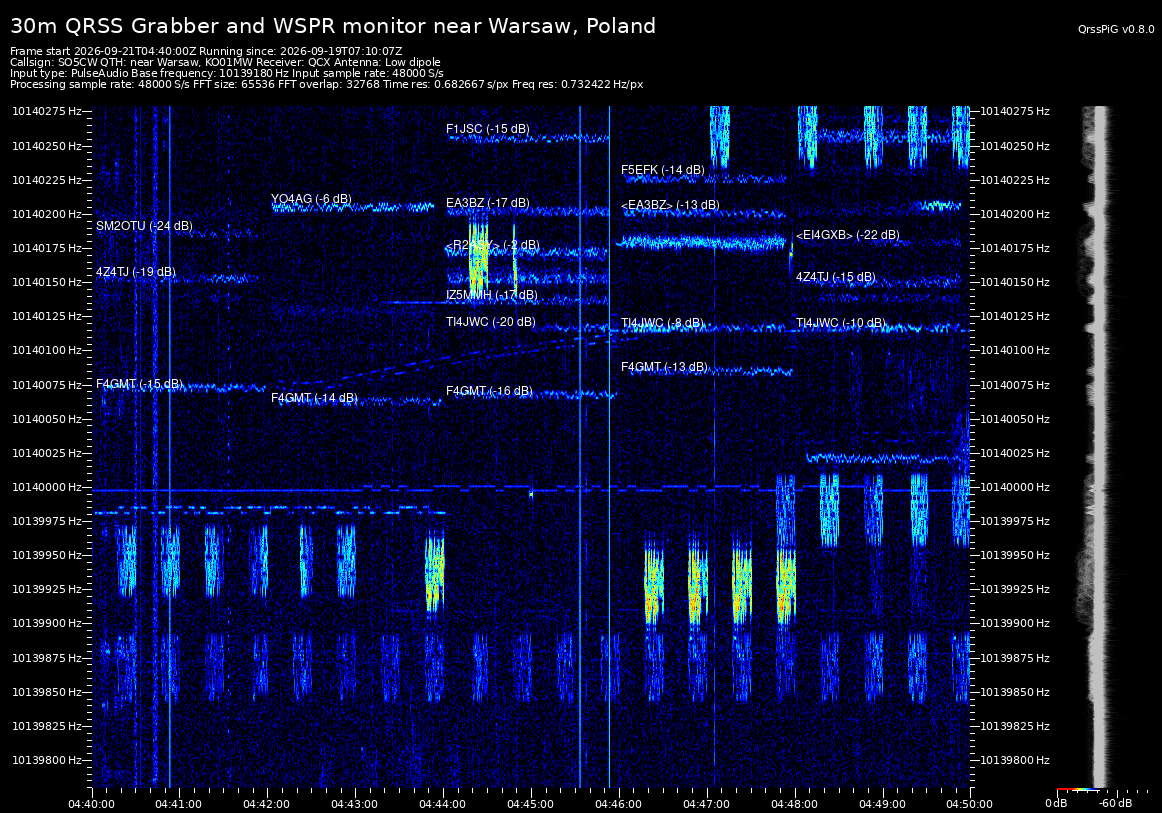
It consists of a QCX and QrssPiG running on a Raspberry Pi connected to a low dipole antenna (inverted-V, feed-point at 6m AGL). Click the picture below to enlarge the current grab, or check out QRSS Plus for the grabs of the last 8 hours.
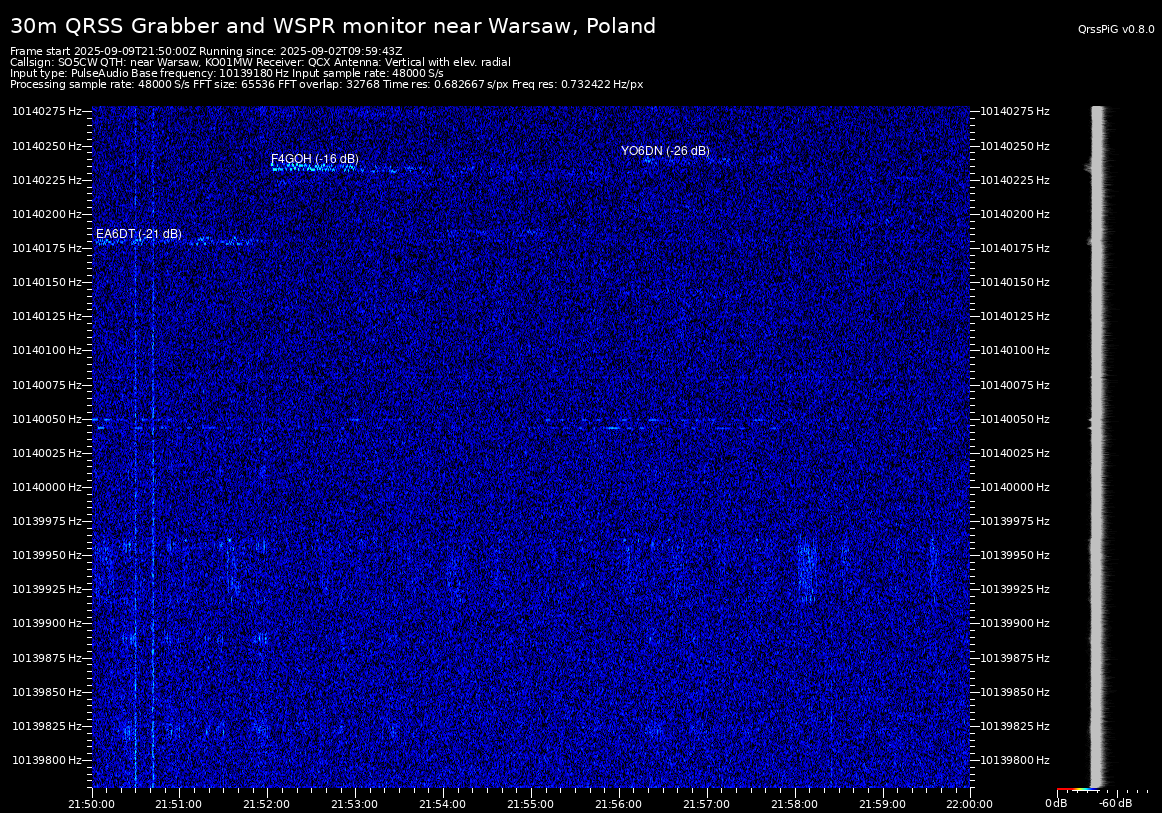
An archive of the last week's grabs is available, as well as a 24h view with clickable links to the corresponding 10 minute frame. The 24h view also features a plot of the Solar flux.
In addition to QrssPiG, the RaspberryPi also runs k9an-wsprd (with some scripts and modifications by DJ0ABR, DK2RO, VK3TPM, etc.) which uploads all spots to WSPRnet.
You can see the latest spots generated by SO5CW on WSPR from wspr.live in the table below:
WSPR.live also has a very nice Grafana Dashboard of SO5CW WSPR spots.
A few screen shots of my own signal being seen on grabbers, thanks to QRSS Plus by Scott Harden (AJ4VD) and Andy (G0FTD).
On 10m, the frequency stability of the Raspberry Pi is not very good...
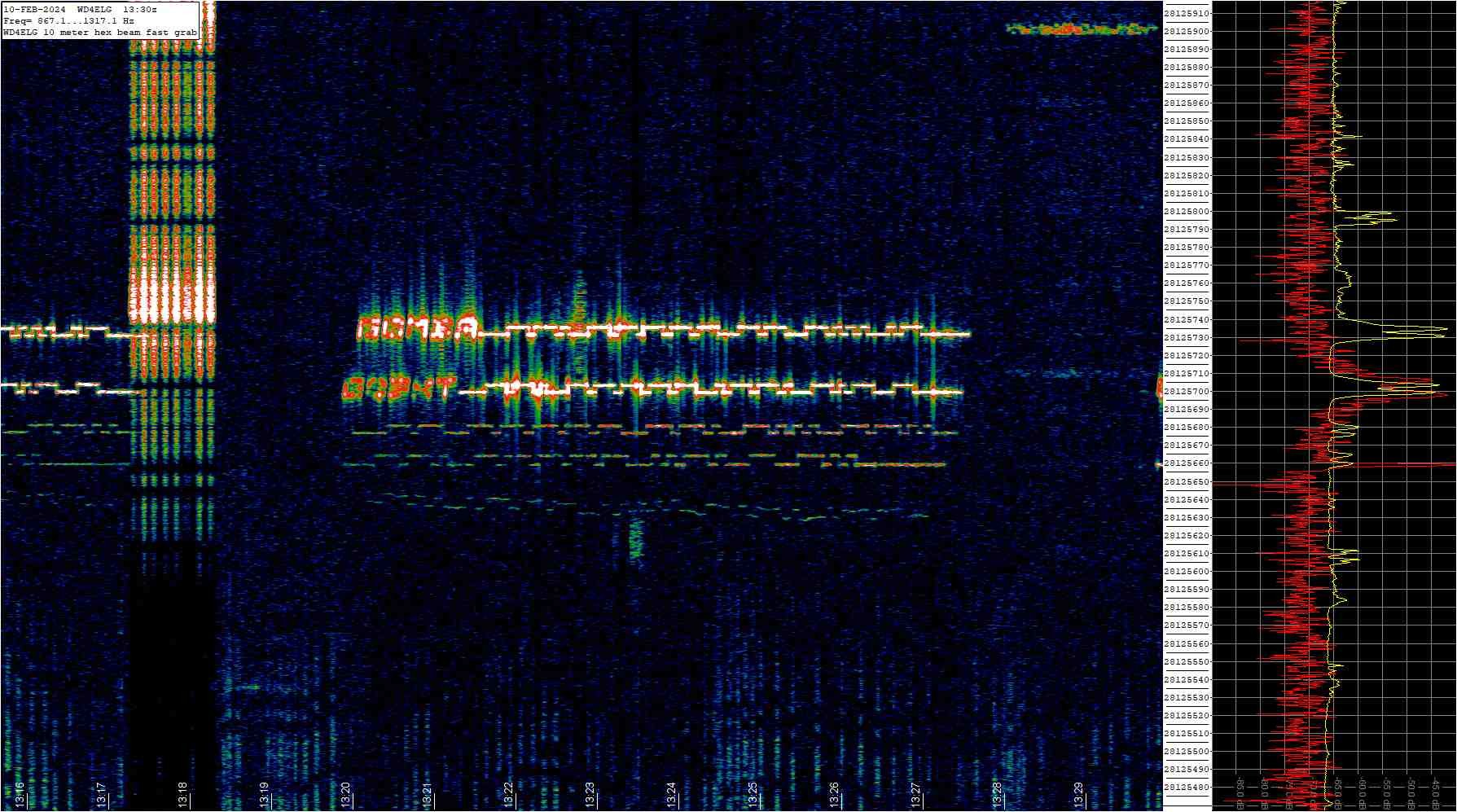
My first capture ever, in QRSS mode (lowest trace).
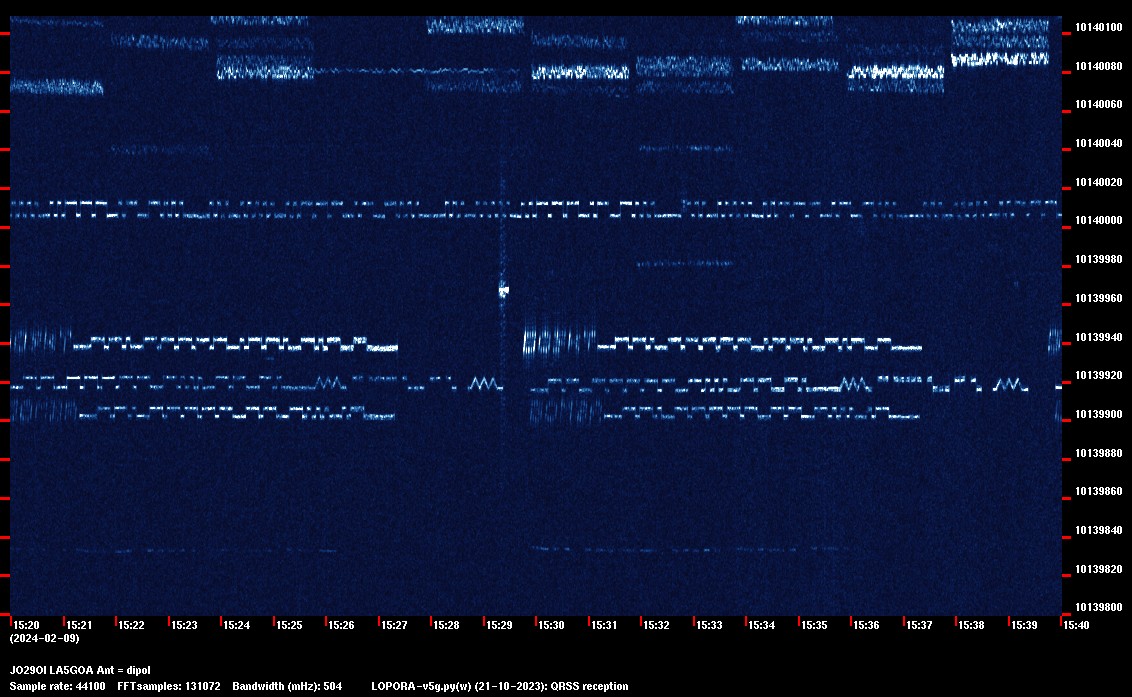
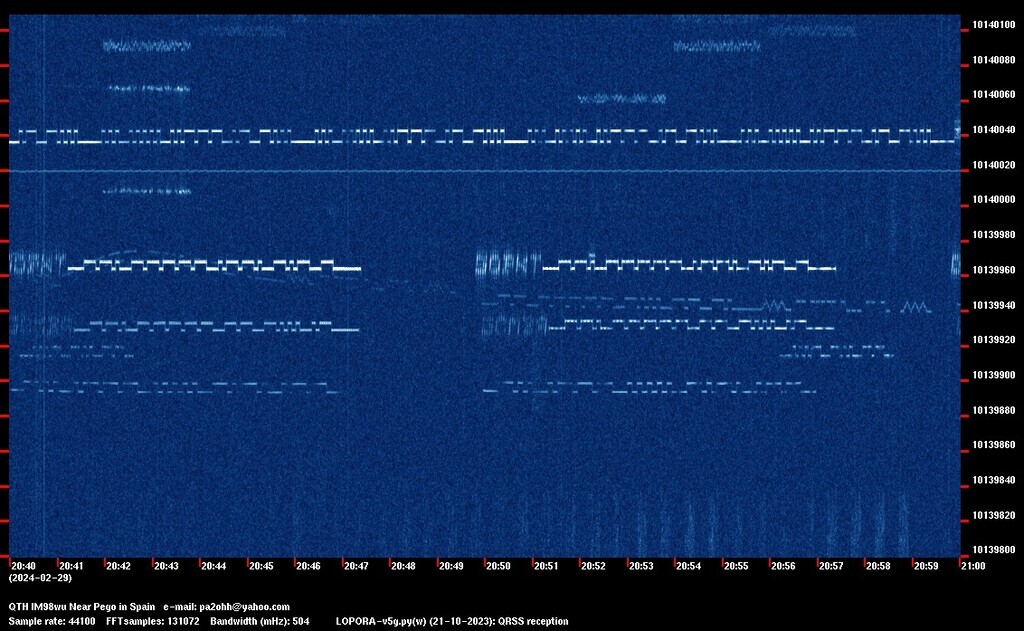
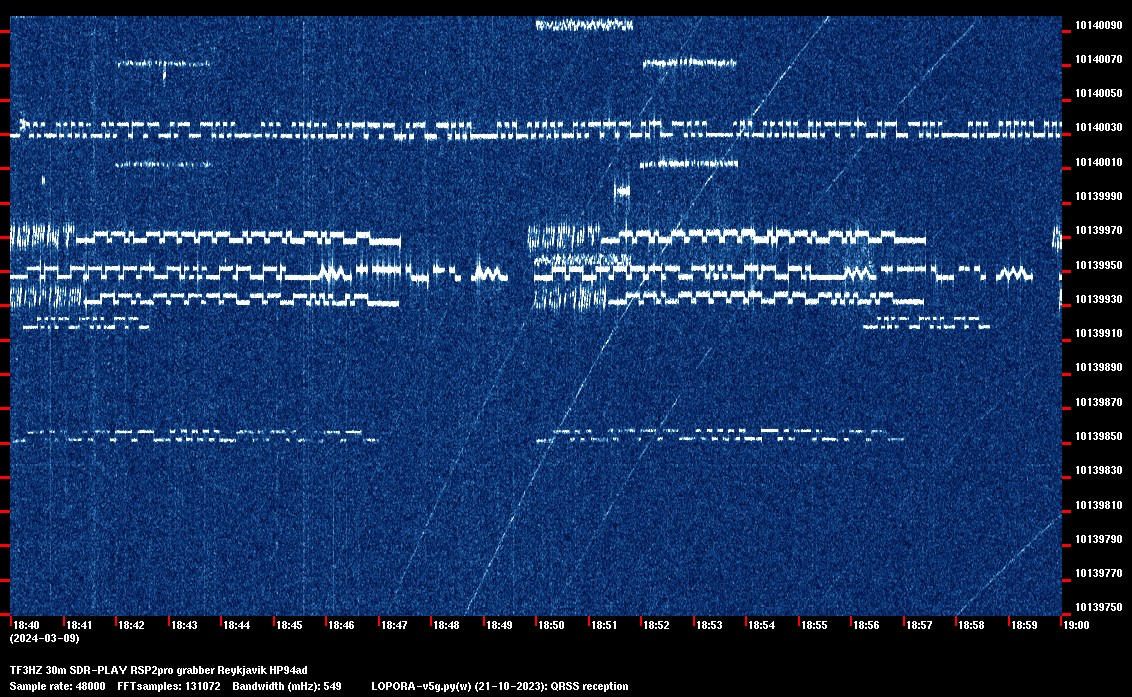
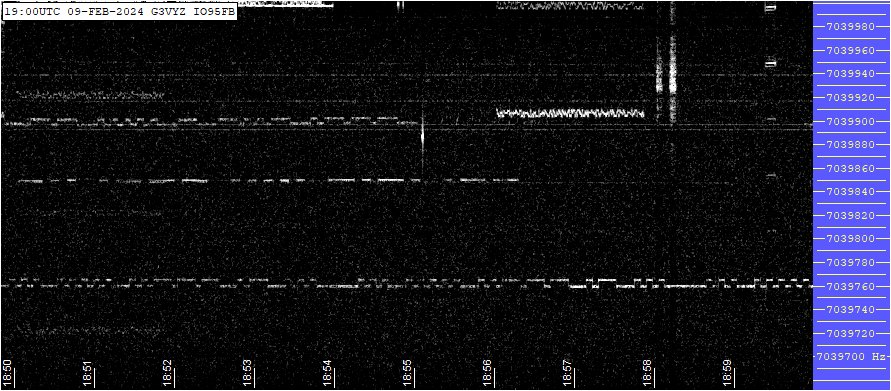
My own transmission over a 15km path with airplane scatter.

Again, strong airplane scatter.


Last modified: Monday, 21-Sep-2026 05:21:08 UTC